





Have you ever checked your bank balance at the end of the month and thought:
- What Are Budget Tracking Apps?
- Why Students in India Need Budget Tracking Apps
- 1. Limited Income
- 2. Unexpected Expenses
- 3. Building Good Habits Early
- 4. Saving for Goals
- 5. Avoiding Debt
- Also Read: What is SIP? Why Most Indians Still Don’t Use It (Big Mistake)
- What Makes a Good Budget Tracking App?
- Best Free Budget Tracking Apps for Students
- 1. Walnut
- 2. Money Manager Expense & Budget
- 3. Monefy
- 4. Wallet by BudgetBakers
- 5. Goodbudget
- 6. Spendee
- 7. Google Sheets Budget Template
- Indian-Friendly Budget Tracking Apps
- How to Choose the Right Budget Tracking App
- Simple Budgeting Tips for Students
- Common Mistakes Students Make
- Are Budget Tracking Apps Safe?
- How Budget Tracking Apps Change Your Life
- Final Thoughts
“Where did all my money go?”
If yes, you are not alone.
Most students in India face the same problem. Pocket money comes… stipend comes… part-time income comes… and suddenly it disappears. No big purchases, no luxury items, yet the wallet feels empty. The truth is — the issue is not always low income. The real issue is not tracking expenses.

This is where budget tracking apps become extremely useful.
You don’t need to be a finance expert. You don’t need Excel sheets. You don’t need complicated formulas. All you need is your smartphone and a simple app that tells you where your money is going.
In this guide, we’ll understand what budget tracking apps are, why students should use them, and which free apps actually work well, especially for Indian users.
What Are Budget Tracking Apps?
In very simple words, budget tracking apps are mobile applications that help you record, monitor, and manage your daily expenses and income.
Think of it like a digital diary for your money.
Instead of guessing how much you spent on food, travel, or shopping, the app shows you exact numbers. It creates charts, summaries, and reminders so you don’t overspend.
You might be surprised how small expenses — ₹50 here, ₹100 there — slowly become thousands of rupees in a month. Budget tracking apps make these patterns visible.
Why Students in India Need Budget Tracking Apps
Many students think budgeting is only for adults or working professionals. That’s not true. In fact, students benefit the most from learning money management early.
Here’s why:
1. Limited Income
Students usually depend on pocket money, part-time jobs, or scholarships. Budgeting helps stretch every rupee.
2. Unexpected Expenses
College life brings surprise costs — projects, events, travel, birthday gifts. Tracking helps prepare for these.
3. Building Good Habits Early
If you learn money discipline at 18 or 20, your future self will thank you.
4. Saving for Goals
Want to buy a new phone? Go on a trip? Budget tracking helps you save gradually.
5. Avoiding Debt
Many young people fall into credit card or BNPL traps because they don’t track spending.
Also Read: What is SIP? Why Most Indians Still Don’t Use It (Big Mistake)
What Makes a Good Budget Tracking App?
Not all apps are equal. Some are complicated, some are filled with ads, and some are not suitable for beginners. A good app for students should have:
- Free version available
- Simple interface
- Manual entry option
- Clear charts and reports
- Reminder notifications
- Indian currency support
- Offline mode (optional)
The goal is not to impress with fancy features. The goal is to make money tracking easy and consistent.
Best Free Budget Tracking Apps for Students
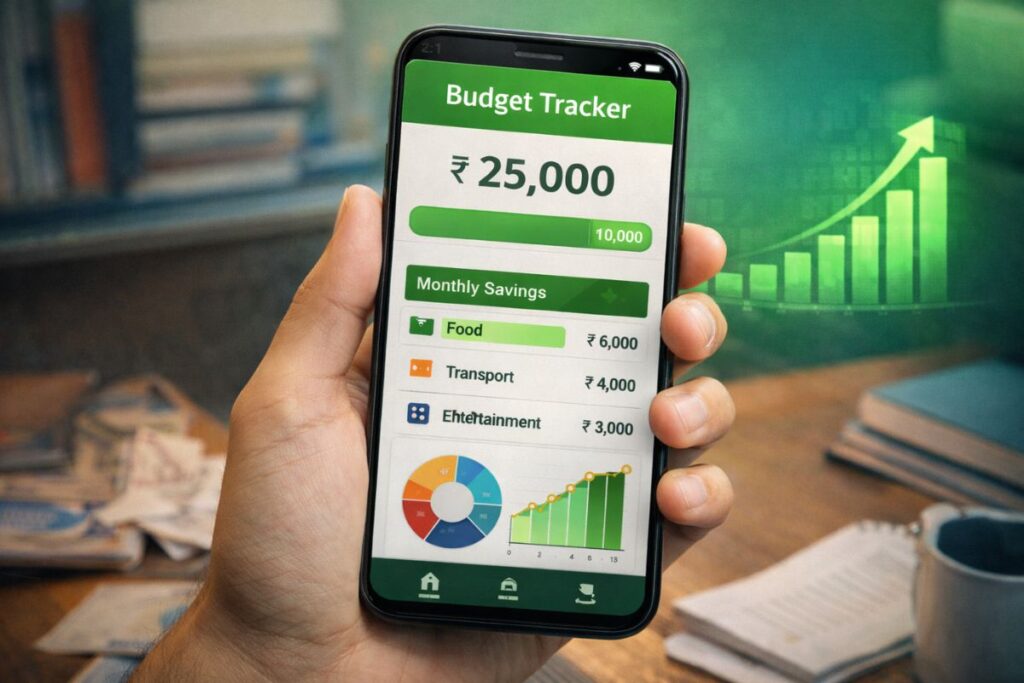
Let’s look at some practical options. These apps are beginner-friendly and useful for Indian students.
1. Walnut
Walnut is very popular in India because it automatically tracks SMS alerts from banks and UPI payments.
Why students like it:
- Automatic expense tracking
- UPI and bank support
- Bill reminders
- Indian interface
Limitations:
- Requires SMS permissions
- Less control for manual tracking
Best for those who prefer automation.
2. Money Manager Expense & Budget
This app is great for manual trackers who want full control.
Features:
- Easy expense entry
- Visual graphs
- Budget setting
- Multiple accounts
Pros:
- Very clean interface
- Works offline
- Good for beginners
Cons:
- Ads in free version
3. Monefy
Monefy is known for its simplicity. It is perfect for students who hate complex screens.
Why it works:
- One-tap expense entry
- Bright colorful charts
- Fast and lightweight
Downside:
Limited advanced features in free version.
4. Wallet by BudgetBakers
Wallet is more advanced but still beginner-friendly.
Highlights:
- Budget planning
- Expense reports
- Optional bank sync
- Cloud backup
Best for:
Students who want both manual and automatic tracking.
5. Goodbudget
Goodbudget follows the “envelope budgeting” concept. You divide money into categories like Food, Travel, Shopping, etc.
Pros:
- Helps control spending
- Encourages saving
- Works across devices
Cons:
Requires discipline to maintain.
6. Spendee
Spendee has a very attractive design and is easy to use.
Features:
- Shared wallets for friends
- Visual dashboards
- Simple budgeting
Great for students living in hostels or sharing flats.
7. Google Sheets Budget Template
Not exactly an app, but a powerful free tool. Many students prefer it because it is flexible and fully customizable.
Why it’s useful:
- Completely free
- No ads
- Works on phone and laptop
- Full control
But it requires manual effort.
Indian-Friendly Budget Tracking Apps
Some apps are better suited for Indian users due to UPI, Rupee currency, and local support.
- Walnut – best for automatic tracking
- Money View – Indian UI
- Axio – UPI tracking
These apps understand Indian spending patterns like recharge, UPI, and utility bills.
How to Choose the Right Budget Tracking App
Before downloading any app, ask yourself:
- Do I want automatic or manual tracking?
- Do I prefer charts or simple lists?
- Do I want offline mode?
- Am I comfortable linking bank accounts?
- Do I need shared budgeting with friends?
Choose an app that feels comfortable, not overwhelming.
Simple Budgeting Tips for Students
Even the best budget tracking apps won’t help if habits don’t change. Here are simple tips:
Track Every Expense
Even ₹20 matters.
Set Weekly Limits
Instead of monthly only, use weekly caps.
Save First, Spend Later
Keep at least 10–20% aside.
Review Monthly Reports
Understand patterns and cut unnecessary spending.
Use Cash Sometimes
Digital payments hide spending reality.
Common Mistakes Students Make
- Ignoring small expenses
- Not updating the app daily
- Expecting instant savings
- Using too many apps
- Not setting goals
Consistency is more important than perfection.
Are Budget Tracking Apps Safe?
Most reputable apps are safe, but always:
- Download from official app stores
- Read reviews
- Avoid unknown apps
- Don’t share OTPs
- Use strong passwords
If uncomfortable linking bank accounts, choose manual tracking.
How Budget Tracking Apps Change Your Life
When students consistently track money for 3–4 months, something interesting happens:
- Spending awareness increases
- Impulse buying reduces
- Saving becomes natural
- Financial confidence grows
It’s not about becoming rich overnight. It’s about gaining control.
Final Thoughts
You don’t need a big salary to manage money wisely. You don’t need finance degrees or expensive software. All you need is a simple budget tracking app and the willingness to check it daily.
The biggest mistake most students make is thinking, “I’ll start later.”
Later never comes.
Start today. Track for 30 days. Observe patterns. Improve slowly.
Money management is not about restriction — it’s about freedom and clarity.
The app you choose doesn’t matter as much as the habit you build. Once you start tracking, you’ll realize that managing money is not difficult… it just needs awareness.
And awareness begins with one small step —
downloading a budget tracking app and actually using it.